Education System
Rethinking Education - How Neighbourhood Microschools in Bangalore Are Building Learning Communities
Nov 4, 2025
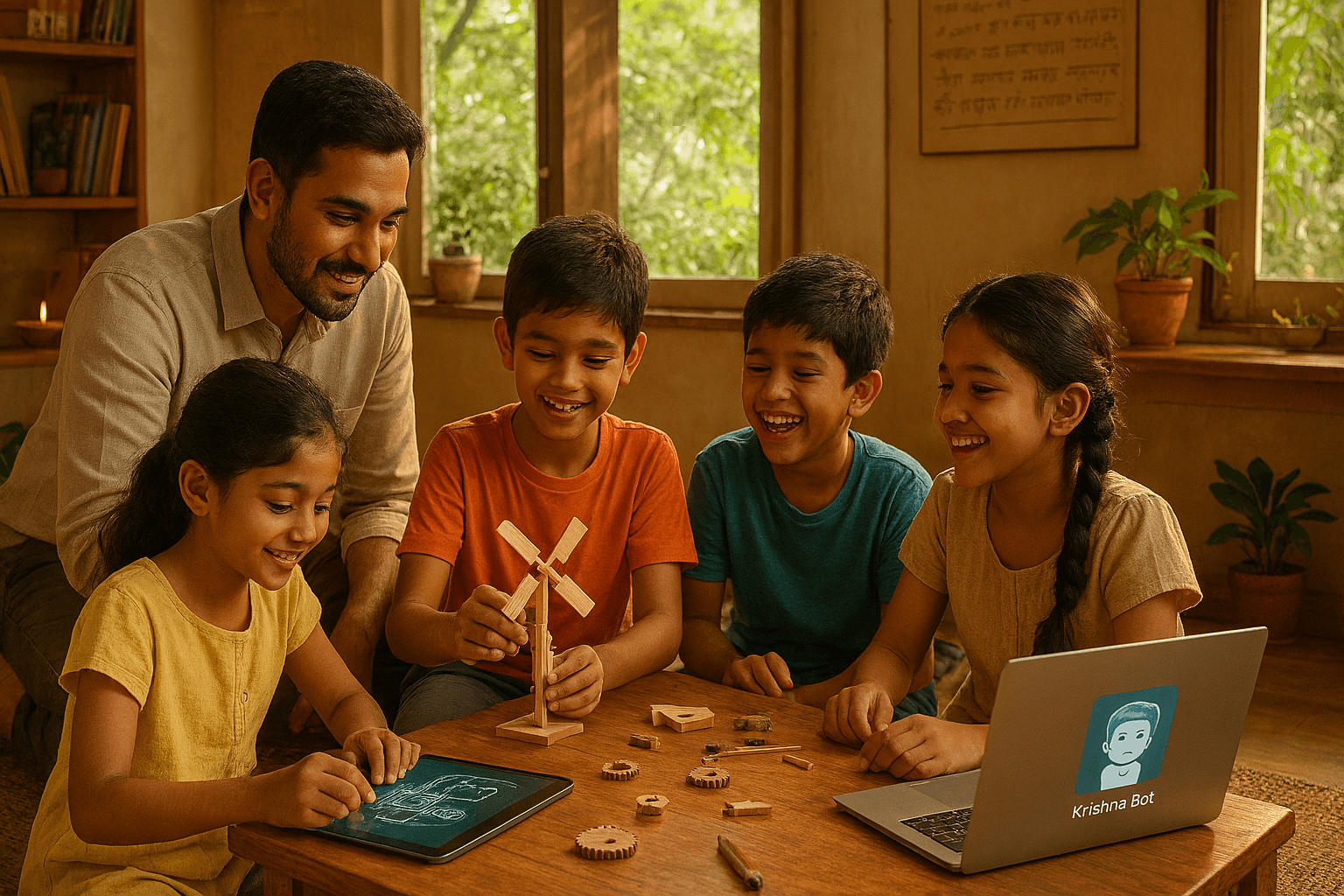
In a quiet lane in Rajarajeshwari Nagar, a group of children gather in a home-like environment, greeted not by a school bell but by their mentor. This is the future of education in India the neighbourhood microschool by Wizkids Gurukul.
Once, the Gurukul system connected learning with community, values, and self-inquiry. Today, Wizkids Gurukul co-created with Purna Chetana Public School, Mysore are bringing back this wisdom through affordable, community-based microschools that blend ancient pedagogy with 21st-century tools.
Why Microschools Matter
Traditional schools often follow a “factory model of education” 8 hours of classes, 3 hours of tuition, 2 hours of homework. Microschools break this pattern
They are small, personalized learning environments, often set up in a neighbourhood home, serving 20–30 students. This model drastically reduces infrastructure costs, making affordable micro-schooling systems in Bengaluru accessible to young families.
Beyond affordability, microschools enable emotional safety, peer connection, and community engagement the same social fabric that defined India’s Gurukuls.
The Wizkids Model: Where Modern AI Meets the Ancient Gurukul
At Wizkids Gurukul, powered by AI-based adaptive learning, technology acts as a guide not a replacement for the mentor.
Each child interacts with an AI tutor, affectionately called Krishna Bot, that answers academic queries and supports inquiry-based learning. This model promotes self-directed exploration, where curiosity drives knowledge, not grades.
The Light of the Self Foundation infuses this ecosystem with cultural and spiritual grounding, ensuring children grow with Samskriti (cultural identity) and Swa-chintana (self-awareness).
Learning through Experience Vimarshana at Work
At the heart of this approach lies Vimarshana, an activity-based evaluation system developed at Purna Chetana.
Instead of exams, students demonstrate learning through real-world application. For instance, after a science lesson on energy, students might build a small windmill or conduct an experiment. Mentors observe how they apply logic, creativity, and teamwork not how much they can memorize.
This experiential assessment nurtures:
Critical Thinking: Students learn to connect classroom concepts with real-life contexts.
Emotional Intelligence: Group reflections after each activity foster empathy and communication.
Confidence: Evaluation is supportive, not punitive.
The Result: Stronger Learning Outcomes
Studies globally show that community-based microschools improve learning outcomes by allowing mentors to focus on each child’s needs. In Wizkids’ Gurukul, learning is mastery-based - children move to new topics only after internalizing core concepts.
This balance of AI-personalized learning and Vimarshana-led evaluation ensures deeper understanding and joy in learning.
The microschool movement is not just an educational reform - it’s a return to community-driven education. By combining AI, inquiry, and culture, neighbourhood we, at Wizkids Gurukul are transforming education into an act of wisdom, not competition.
“When learning becomes personal, community becomes powerful.”
"Curious about a school where ancient wisdom meets future-ready learning? Discover Wizkids Gurukul — submit your enquiry today at wizkids.guru/admissions."